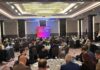
An important chapter in Greek shipping history and the timeless role of the ship classification societies in its development were the focus of the presentation of the album “NAFS+GNOMON: NIOGNOMON. THE ROUTE OF GREEK SHIPPING,” which took place on the afternoon of Friday, December 12, 2025, in the welcoming premises of the Yacht Club of Greece.
The album, edited by historian Panagiotis Spyropoulos and VAPORIA MARINE, presents the history of Greek shipping from the early post-revolutionary years to the present day, with particular emphasis on the role of the ship classification societies and their contribution to the creation of a safe and reliable shipping framework.
Representatives of local government, institutional bodies, and the shipping community addressed the event, including the Mayor of Piraeus, Mr. Yannis Moralis, the Mayor of Andros, Mr. Theodosis Sousoudis, the President of the Hellenic Chamber of Shipping, Mr. George Alexandratos, Ms. Vasiliki Vlachantonis, member of the Piraeus Chamber of Commerce and Industry, the President of the Hellenic Institute of Marine Technology, Dr. Nikolaos Liapis, the President of the Union of Banking and Financial Executives of Shipping, Mr. George Xiradakis, and the President of the Piraeus Business Club, Mr. Stavros Kasidiaris. Greetings were also given by the founder of LiberoGroup, Vice Admiral (Technical) HCG (ret.) Mr. Efthimios Liberopoulos, the company’s CEO Mr. Vasileios Lymperopoulos, and the Head of Strategic Planning and Development of Seajets, Mr. Marios Iliopoulos.
Special mention was made of the importance of classification societies for the development of Greek and international shipping, as well as LiberoGroup’s initiative to highlight their historical and institutional contribution through the publication of the album.
As noted by the founder of LiberoGroup, Mr. Efthimios Liberopoulos:
This publication fills a notable gap in the relevant maritime literature. A systematic and thorough account of the concept and history of the institution of the ship classification societies, particularly from the perspective of Greece, has not been presented in its entirety until now. This publication does not aim to sail to “Ithaca” or march to “Rome”, but rather to review the history of the bodies that oversaw the implementation of regulations relating to ship safety.
The event was coordinated by journalist Antonis Sroiter and attended by numerous executives from the shipping and business sectors, as well as embassy representatives. At the end of the presentation, guests received a copy of the album in specially designed bags.